
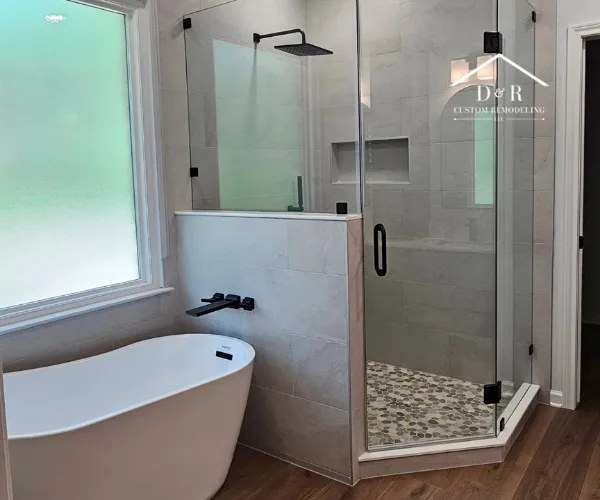
We believe that a beautiful bathroom is only as good as the engineering behind it, as even the finest marble will eventually fail if the underlying infrastructure is neglected. A truly luxurious space is defined by its longevity and silent performance, which is why our methodology is built on four core pillars: Structural Integrity, Advanced Waterproofing, Precision Ergonomics, and Material Longevity. By prioritizing these technical foundations, we protect your investment against the shifting soils and humidity of Central Texas, ensuring your sanctuary remains as functional and flawless decades from now as it is on the day of the reveal.
This mechanical tension typically seeks the path of least resistance, resulting in a characteristic 45-degree diagonal fracture that telegraphs from the shifting substrate directly through the finished flooring surface. Because ceramic and porcelain lack the tensile strength to bridge these structural movements, the crack serves as a visual map of the underlying stress distribution within the home’s footprint, often pointing directly to foundation settlement or joist deflection. Rather than being a mere surface-level defect, these fractures indicate that the bond between the tile and the subfloor has been compromised by forces far greater than the adhesive can withstand. Without an isolation membrane or proper structural reinforcement to decouple the finish materials from the moving slab, even the highest-quality tile will eventually succumb to this inevitable geometric stress.
The Science of Soil Shifting and Subfloor Stress
To understand why your flooring is failing, you must first understand the ground beneath it. Many regions experience significant “shrink-swell” cycles, where clay-rich soils expand when wet and contract during dry spells. This movement isn’t always vertical; often, one corner of a room may sink or lift faster than the center.
When the foundation moves, the subfloor, typically a concrete slab or plywood, is forced to flex. Since ceramic and porcelain tiles are rigid, they cannot bend to accommodate this movement. The diagonal pattern is a physical manifestation of “shear force,” where the tension is greatest across the center of the tile, forcing the break to follow the path of least resistance.
When we approach a bathroom renovation in Austin, our team doesn’t just look at the surface. True authority in remodeling comes from understanding the interplay between geology and architecture. Cracking is rarely a “tile problem”; it is almost always a “substrate problem.”
By applying our proprietary expertise and experience, we analyze the specific crack migration. A hairline crack might indicate minor seasonal shifts, while a wide, jagged diagonal break suggests a more significant structural divide. Identifying these nuances early prevents the same issue from recurring after the new floor is installed.
The Proprietary D & R Approach to Durable Flooring
We believe that a beautiful bathroom is only as good as the engineering behind it, as even the most stunning marble or intricate mosaic is destined to fail if the infrastructure beneath it is neglected. A truly luxurious space is defined by its longevity and silent performance, which is why our methodology is built on four core pillars:
- Expertise and Experience: Our team has spent decades studying how local climate patterns affect home foundations. We recognize the difference between a simple curing crack and a structural shift caused by hydrostatic pressure.
- Customized Designs: No two bathrooms are identical. We develop customized designs that don’t just focus on aesthetics but also on the technical requirements of the space. This might include the use of uncoupling membranes, which act as a flexible buffer between the moving subfloor and the rigid tile.
- Quality Craftsmanship: The installation phase is where precision matters most. From the thin-set mortar consistency to the placement of expansion joints, our quality craftsmanship ensures that the materials are installed to withstand tension.
- Transparent Communication: We believe homeowners should be part of the process. Through transparent communication, we explain why we are recommending specific underlayments or foundation stabilization before a single tile is laid.
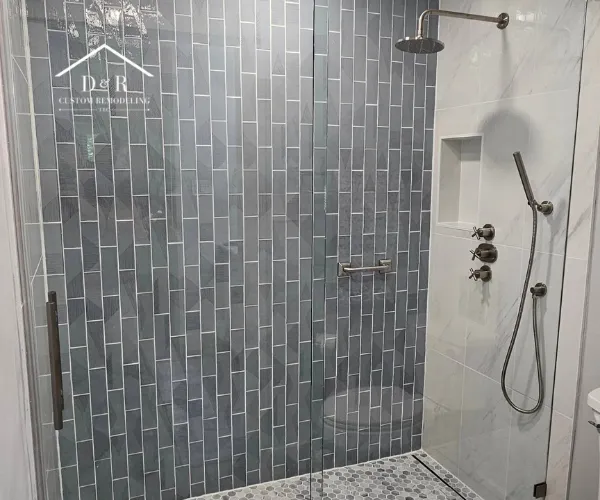
Why Regional Climate Matters
The regional environment plays a massive role in how your home’s structural integrity behaves over time, acting as a constant catalyst for substrate movement. For instance, during a recent comprehensive audit for a project involving bathroom remodeling in Austin, TX, our team noted that the intense heat of the summer months caused the expansive clay soil to desiccate and pull away from the foundation perimeter. This dehydration leads to significant “edge drop,” where the exterior sections of the slab lose their support and settle lower than the interior. This specific type of uneven movement is what eventually translates into those frustrating, persistent diagonal lines that mark your master bath floor, signaling that the rigid tile has reached its breaking point under the pressure of the shifting earth.
Whether your property is located in Lakeway, Bastrop, or Kyle, the geological challenges remain remarkably similar due to the prevalence of “fat clays” and high-plasticity soil profiles. These soils are notorious for their volatile shrink-swell capacity, meaning they move frequently and with enough force to heave entire concrete sections. This environmental reality is why we prioritize the integration of high-performance, polymer-modified mortars and advanced flexible grout systems. These specialized materials offer a vital degree of “give” and elastic deformation that traditional, brittle cement products simply lack. By utilizing these superior bonding agents, we create a flooring assembly that can better tolerate the inevitable micro-movements of the Central Texas landscape without sacrificing the bond or the beauty of your finish.
Integrating Stability into Your Remodel
If you are currently in the planning stages of an Austin bathroom remodeling project, the foundational first step must always be a meticulous, forensic inspection of the subfloor and the supporting structure beneath it. For homes built on a concrete slab, our diagnostic process involves checking for “doming,” where the center of the slab heaves upward, or “dishing,” which occurs when the perimeter of the slab settles more rapidly than the interior. In contrast, if you own a pier and beam residence, our inspection shifts focus to the wooden framework, where we look for signs of compromised structural integrity, such as rotted joists, moisture-damaged subflooring, or piers that have shifted out of plumb due to soil volatility. Identifying these elevation variances and structural weaknesses early is essential, as even a fraction of an inch of movement can cause a high-end tile installation to fail prematurely.
By proactively addressing these subterranean issues during the bathroom renovation in Austin, we ensure that your aesthetic investment is physically protected for the long term. One of the most effective methods we employ to mitigate the effects of seasonal shifting is the installation of modern uncoupling membranes between the substrate and the tile. These innovative, multi-layered mats act as a shear-stress-absorbing buffer, effectively “uncoupling” the rigid tile layer from the moving slab or plywood below. This specialized engineering allows the subfloor to expand and contract slightly in response to the environment while the tile surface remains perfectly still and stress-free. By “breaking” the direct transfer of energy from the foundation to the porcelain, we virtually eliminate the risk of those characteristic diagonal cracks, providing a durable and resilient finish that stands up to the unique geological demands of the region.
People Also Ask
What is the difference between a hairline crack and a structural crack? Hairline cracks are often limited to the tile surface or grout and are usually caused by minor settling or shrinkage during the curing of the mortar. Structural cracks are wider (often more than 1/8 inch) and extend across multiple tiles in a straight or diagonal line indicating movement in the home’s foundation or subfloor.
Can I just replace the cracked tiles? While you can replace individual tiles, the crack will likely return if the underlying movement isn’t addressed. It is best to consult a professional to see if an uncoupling membrane or foundation repair is needed first.
Does the size of the tile affect cracking? Yes. Larger format tiles are more susceptible to cracking from floor movement because they have less grout surface area to absorb the stress. Smaller tiles or mosaics have more “joints,” which can sometimes allow for very minor flexing without fracturing the tile itself.
Choosing the Right Path Forward
Cracked tiles are a symptom, not the disease. While a hairline fracture might seem like a simple cosmetic nuisance, it is often a warning sign of shifting foundations, moisture intrusion, or improper subfloor preparation. To truly fix the problem and ensure it never returns, you need a team that understands the specific structural nuances of Central Texas homes, where the expansive clay soil is notorious for its constant movement.
At D & R Custom Remodeling, we specialize in identifying these hidden challenges before they ruin your new aesthetic. Our diagnostic approach goes beyond the surface; we evaluate the underlying integrity of your space to provide long-term stabilization. By integrating advanced underlayment systems and precision craftsmanship, we don’t just replace your flooring; we build a foundation for beauty that lasts.
If you’re ready to transform your space with a team that values technical integrity as much as visual beauty, we are here to help. For more information or to get started, visit our website!